
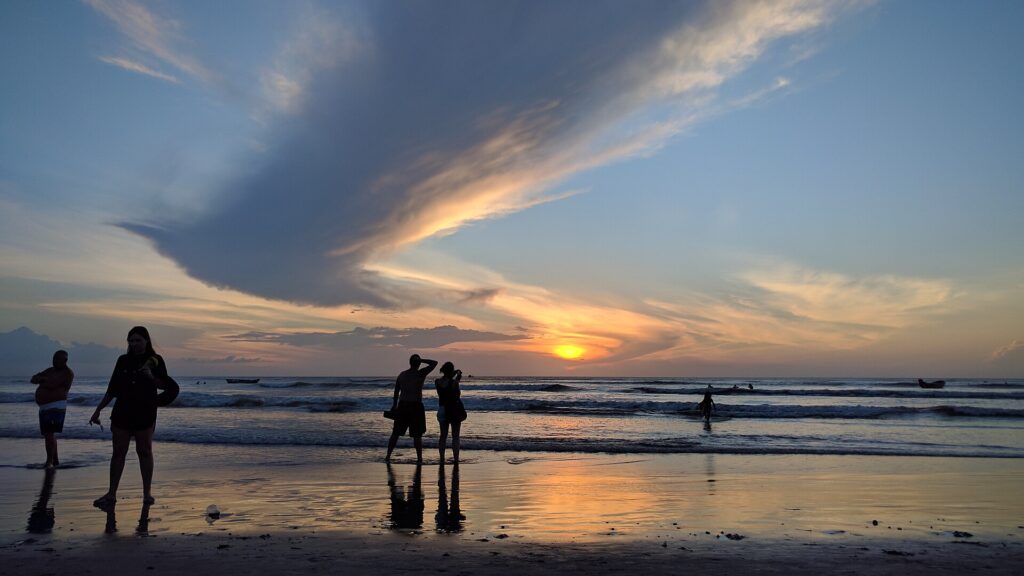
Four days is the ideal amount of time to see Jericoacoara without rushing: enough for the sunset on the dune, a swim in the lagoons, the Guriú mangrove and still a spare morning for a trail. In this day-by-day itinerary you, ecotourist, will find what to do in each part of the day, what each tour costs and how to enjoy it all while leaving the smallest footprint possible on the village. If you are still planning the trip from scratch, start with our complete Jericoacoara guide.
Before you start: arrival and the fee
The usual access is to fly into Fortaleza and continue by transfer to the village (R$ 100 to R$ 150 each way, about 5 hours, with the final crossing over the dunes in a 4×4 jardineira). Remember to pay the Sustainable Tourism Fee of Jijoca de Jericoacoara — R$ 41.50 for stays of up to 10 days (R$ 4.15 per additional day; value confirmed on the city council’s official website in August 2026) — which funds the region’s conservation infrastructure. Once in the village, the car stays outside: Jeri is a place for walking barefoot, and that is exactly why it is still special.
Day 1 — Arrival, the village and the most famous sunset in Brazil
Set the afternoon aside to get to know the village on foot: the sand streets, the Praia Principal and the local shops — favor guesthouses and restaurants run by the community, which is what keeps Jeri alive. At the end of the afternoon, climb the Duna do Pôr do Sol and join the most famous ritual in Ceará: the sun diving into the sea to applause. It costs nothing. Ecotourist tip: the dune is a fragile environment, so climb by the marked sides and take back down everything you take up.
Day 2 — The east coast tour: Pedra Furada and the lagoons
The classic east-coast buggy tour (R$ 300 to R$ 600 per vehicle for up to 4 people) fills the whole day: a stop at the Árvore da Preguiça, sculpted by the wind; the view of Pedra Furada, the postcard of the Jericoacoara National Park; and a long swim in the Lagoa Azul and Lagoa do Paraíso, with their hammocks set in the crystal-clear water. Share the buggy with other ecotourists to cut both the cost and the emissions at once. At the lagoons, choose sunscreen without oxybenzone: the transparent water you are admiring will thank you.
Day 3 — The west coast tour: Guriú, seahorses and Tatajuba
Heading west, the buggy (same price range) crosses the dunes to the Guriú mangrove, where a canoe paddled by residents takes you to watch seahorses in their habitat (around R$ 50 to R$ 80 per person) — responsible observation, without touching the animals or lifting them out of the water. Then Tatajuba waits with its lagoon and its lazy hammocks. It is the most authentically ecotouristic day of the itinerary: wildlife, mangrove and traditional communities in a single outing.
Day 4 — The Serrote trail and goodbye
On the last morning, take the easy trail up to the Serrote and the lighthouse, with a panoramic view of the coast — at low tide you can walk down to Pedra Furada by land (check the tide table at your guesthouse). Come back for one last swim in the sea, an açaí, and catch the return transfer to Fortaleza in the early afternoon.
What the 4-day itinerary costs
| Item | Estimated price (2026) |
|---|---|
| Return flight to Fortaleza | R$ 900 – R$ 1,500 |
| Transfers (both ways) | R$ 200 – R$ 300 |
| Sustainable Tourism Fee | R$ 41.50 |
| Guesthouse (3 nights, double) | R$ 450 – R$ 1,080 |
| Food (4 days) | R$ 480 – R$ 960 |
| East and west buggy tours (shared) | R$ 150 – R$ 300 per person |
| Canoe at Guriú | R$ 50 – R$ 80 |
Final ecotourist tips
- July to December is the windy season — great for kitesurfing; January to June has fuller lagoons.
- Bring a reusable bottle: several guesthouses have filtered water points.
- Not sure what to put in the bag? See our checklist of what to pack for Jericoacoara.
- Torn between Jeri and another dream island? Compare them in Jericoacoara or Fernando de Noronha.
When to do this itinerary
Best period: July to December — dry season and strong winds (a paradise for kite and windsurfing); January to June for full lagoons. Also works in: any month — Jeri is a year-round destination. Careful in: March to May, the heaviest rainfall, when some tours can be affected. Why: the wind and the lagoons take turns as the star attraction — pick the season for the experience you want. (Seasonality checked in August 2026.)
🥾 Who is it for?
Effort: light — the itinerary alternates buggy tours with short walks. Children: every age enjoys it; long days call for a hat and plenty of water. Older travelers: the itinerary works well at a gentle pace, favoring buggy transfers. People with reduced mobility: possible with support; tell your buggy driver so as to avoid long walks on sand. Wheelchair users: this itinerary is not adapted — the soft sand streets of the village and boarding a buggy (which requires a transfer) are concrete obstacles, and we found no verified adapted infrastructure; ask your guesthouse about adaptation before planning.