
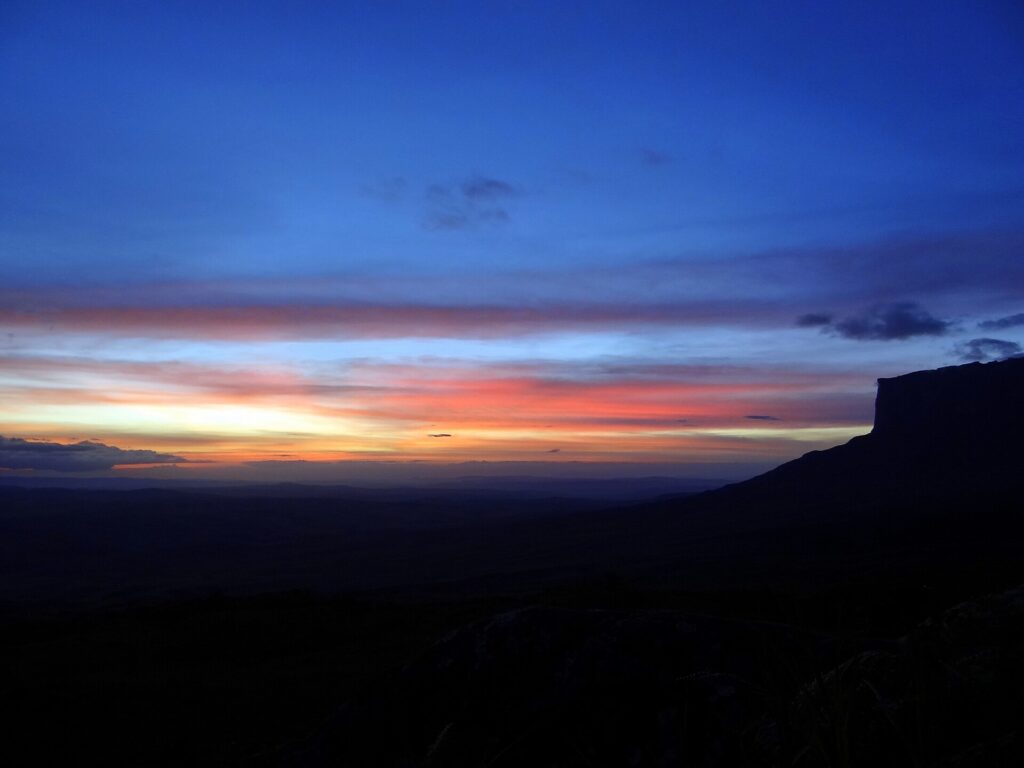
At the far north of Brazil, where the country borders Venezuela and Guyana, lies Brazil’s most indigenous municipality: Uiramutã, in Roraima, where 96% of the population belongs to the Macuxi, Ingarikó and Patamona peoples. Inside the Raposa Serra do Sol Indigenous Land, among the ranges and golden grasslands of the lavrado, more than 80 catalogued waterfalls lie hidden — and a form of tourism that works only one way: with indigenous people as the hosts.
Where it is and how to get there
Uiramutã is about 300 km from Boa Vista, on roads that cross the lavrado — Roraima’s cerrado of golden grass and blue ranges on the horizon. The journey requires a suitable vehicle and, above all, arrangements made in advance: access to the Indigenous Land requires accompaniment by indigenous guides or specialist agencies, with the communities’ authorization.
What to see
- Paiuá, Urucá and Sete Quedas waterfalls — the ones open to visitors, with pools of cold water coming down from the ranges (easy to moderate trails).
- Monte Caburaí — the true northernmost point of Brazil (1,456 m), for multi-day expeditions to the “far north” — the anti-Chuí!
- Maú and Cotingo rivers — rapids and lavrado landscapes that do not look like Brazil… because they are a Brazil few people know.
- Cultural experiences — damurida (the traditional peppery broth), caxiri, parixara dances, craftwork and the stories of the people of the Serra do Sol.
Tourism with a protocol
Visiting Uiramutã means entering the home of peoples who decided, in assembly, to open part of their territory to ethnotourism. The rules are clear: no alcohol, photographs always with permission, respect for restricted periods and places. The money from the outings stays in the communities — every visit strengthens the autonomy of those who have protected these ranges for centuries. Book through Boa Vista agencies specializing in ethnotourism or through the community associations’ contacts.
When to go
From September to March, the drier weather leaves roads and trails in better condition — and the lavrado sky absurdly full of stars. Bring sun cream (the savannah sun is relentless), a light jacket for the mountain nights and an appetite for a Brazil entirely off the script.
🥾 Who is it for?
Effort: moderate — long journeys on dirt roads and uneven trails to the waterfalls; the Caburaí expedition is intense and demands preparation. Children: from ages 10-12, used to rough travel; the infrastructure is simple. Seniors and reduced mobility: the destination is rustic and the distances tiring — recommended only for those with good mobility and an expedition spirit; the cultural experiences in the municipal seat, however, are accessible to everyone. This is a destination of immersion: the more open the ecotourist, the greater the reward.