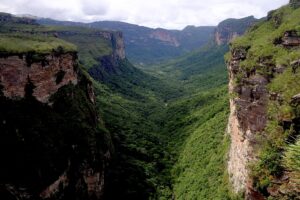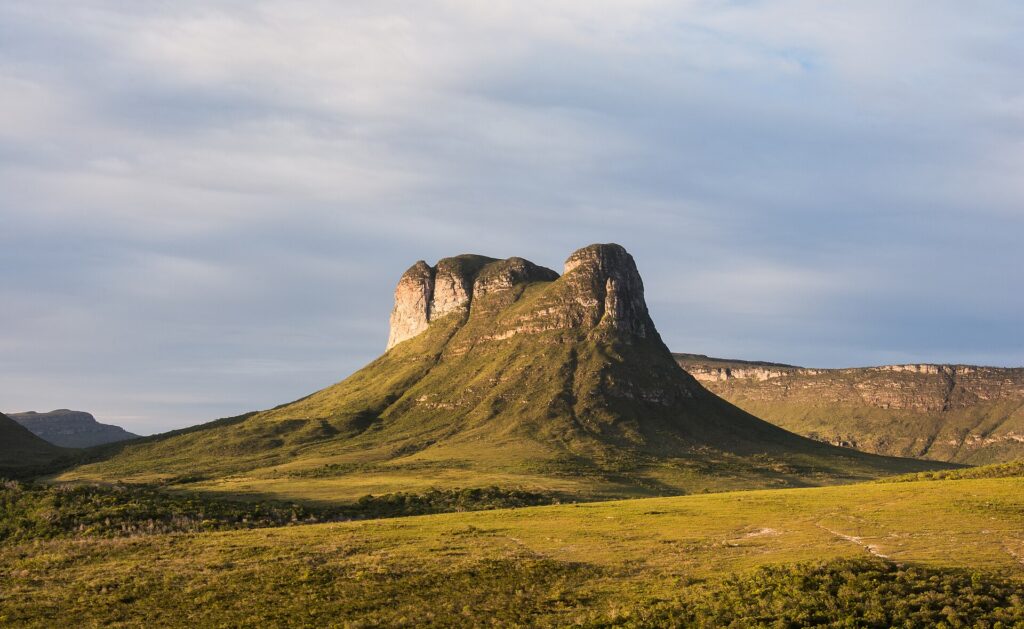
The Chapada Diamantina is the stone heart of Bahia: 152,000 hectares of national park where canyons hide lost valleys, waterfalls drop from 300-meter walls and caves conceal pools of a blue that does not look of this world. For many veteran ecotourists it is simply the best trekking destination in Brazil. This guide organizes the trip: bases, attractions, costs and the choices that define your Chapada.
Where to stay: the bases
Lençóis is the capital of Chapada tourism: a 19th-century diamond-mining town with colorful houses, good food and the largest choice of agencies and guesthouses (R$ 150-500 for a couple) — 6 hours by bus or 1 hour by air from Salvador. The Vale do Capão is the alternative base: a rural, slightly mystical village, the gateway to the Fumaça and Pati trails, ideal for anyone who wants quiet and a trailhead at the door. Mucugê and Igatu, to the south, complete the circuit with stone-village charm and access to the Buracão.
The essentials (and what they cost)
| Attraction | 2026 reference | What it is |
|---|---|---|
| Morro do Pai Inácio | ~R$ 15 | The postcard: a stone table with the most famous sunset in Bahia |
| Poço Azul | ~R$ 80 | Floating in a cave pool lit by a blue shaft of light (September to April) |
| Poço Encantado | ~R$ 60 | Its contemplative sibling — viewing only, of an impossible blue |
| Gruta da Lapa Doce + Pratinha | ~R$ 60-90 each | A giant cave, plus snorkeling in a cave pool on a farm |
| Cachoeira do Buracão | ~R$ 25 + guide | An 85 m fall inside a canyon — nothing in the Chapada is more thrilling |
| Cachoeira da Fumaça (from the top) | free (national park) | A 12 km trail to the 340 m fall that turns into mist |
| Guide / agency (day by car) | ~R$ 360-450 per group | Full-day routes leaving from Lençóis |
The Pati: the jewel in the crown
Voted by many the best trek in Brazil, the Vale do Pati is 3 to 5 days walking between cliff walls, sleeping in the houses of local families who serve home-grown coffee and bananas from their own plot. It is a transformative experience — and it has its own guide here: Vale do Pati: the best trek in Brazil.
When to go
The Chapada works all year, with trade-offs: April to October has dry trails and clear skies (peak trekking); November to March fills the waterfalls — the Fumaça, which dries up mid-year, goes back to “smoking”. The blue pools have a window of their own: the shaft of light that switches the blue on appears from September to April, in the middle of the day. Order the days properly with the 5-day Chapada itinerary, and choose the water with the ranking of waterfalls and pools.
The Chapada ecotourist’s golden rules
- A local guide on the long trails is not optional — it is safety (the weather turns fast) and it is income that sustains conservation.
- Spring water is drinkable at many points — bring a bottle and ask your guide where to fill it.
- Campfires and drones: banned in the park. The silence of the Pati is heritage.
- Coming from the south of the country? Compare it with its Goiás cousin at Chapada dos Veadeiros — sister experiences, and different ones.
🥾 Who is it for?
Effort: moderate to intense — the Chapada Diamantina is a trekking destination; even the “easy” outings involve walking. Children: from ages 8-10 with some habit; Pai Inácio and the caves are the entry-level options. Older travelers and people with reduced mobility: the Morro do Pai Inácio (a short climb) and the caves with walkways (Pratinha, Lapa Doce) let you experience the Chapada without long trails.