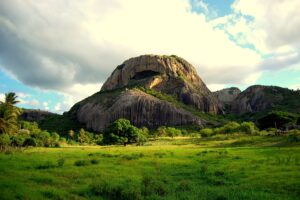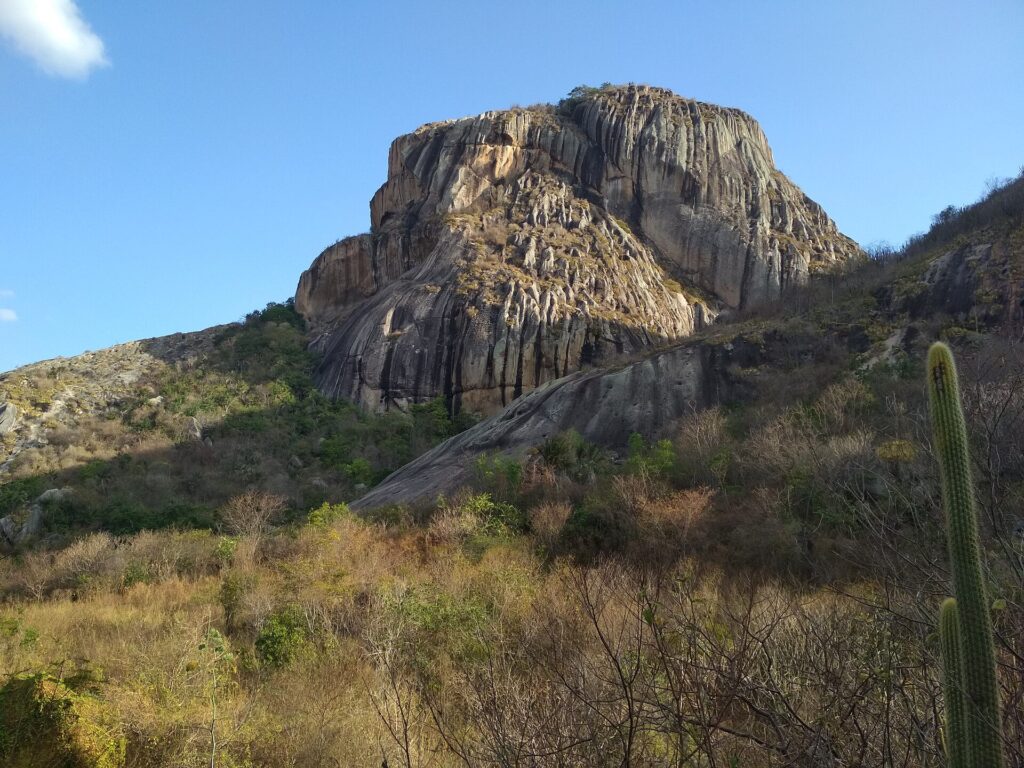
High in the Paraíba agreste, on the border with Rio Grande do Norte, a set of giant rocks sculpted by wind and rain forms one of the most surprising landscapes in the Northeast. Parque Estadual da Pedra da Boca, in Araruna-PB, is one of those destinations that prove the caatinga holds breathtaking scenery — and plenty of adventure.
Where it is and how to get there
The park is in the municipality of Araruna, about 170 km from João Pessoa and a little over 100 km from Natal, which makes it a feasible day trip from either capital. Access is by paved roads as far as Araruna and a final dirt stretch to the park entrance. Many visitors go with agencies offering transport, an accredited guide and insurance — a good call for anyone who would rather not drive in the sertão.
The rocks that give the place its name
The star is Pedra da Boca itself: a rounded cave in the rock that, seen from a distance, looks like a mouth open in the mountain. But it has good company. Pedra da Caveira (“skull rock”) is striking for its resemblance to a human skull, with “eyes” and a “nose” hollowed out by erosion. The group is completed by Pedra do Letreiro, with rock inscriptions, Pedra do Carneiro and Pedra do RN, already on the border between the two states.
Trails
The main trail leads to the mouth of the rock over a route of about 3 km with an elevation gain of roughly 360 meters — demanding, with stretches where you need to use your hands and fixed ropes. The reward is the view over the valley and the constant wind blowing inside the cave. There is also a shorter trail to Pedra da Caveira, still with steep climbs and uneven ground. Wear trail shoes or boots, carry at least 2 liters of water per person, a hat, sunscreen and repellent.
Caatinga nature
Created to protect a precious stretch of caatinga, the park is a great place to get close to this exclusively Brazilian biome: cacti, bromeliads and twisted trees live alongside rock cavies, lizards and birds of prey that nest on the rock faces. At dawn and late afternoon, the golden light on the rocks makes for the best photos — and the mildest temperatures.
When to go
The best window runs from August to October, when the weather is dry and temperatures are gentler. Between April and July the rains leave the trails slippery. In summer the heat bites: start your walks very early.
Practical tips
- Hire a local guide: as well as safety, you support the community of Araruna.
- The restaurant near the entrance serves regional food cooked on a wood stove — try the roast goat.
- Combine the visit with the park’s adventure activities: rappelling, climbing and the famous pendulum.
- Bring cash: mobile signal and card machines do not always work.
For anyone after vertical thrills, we have prepared a full article about rappelling, climbing and the pendulum at Pedra da Boca.
🥾 Who is it for?
Effort: moderate to intense — the main trail is 3 km with 360 m of climbing, ropes and handholds. Children: from age 10 with trail experience; the park base and the restaurant work for younger ones. Seniors and reduced mobility: the trails to the top are not recommended; taking in the formations from the base is impressive enough.