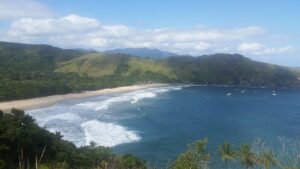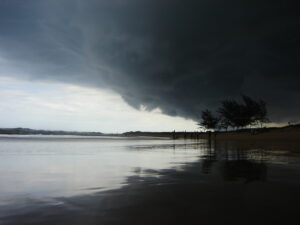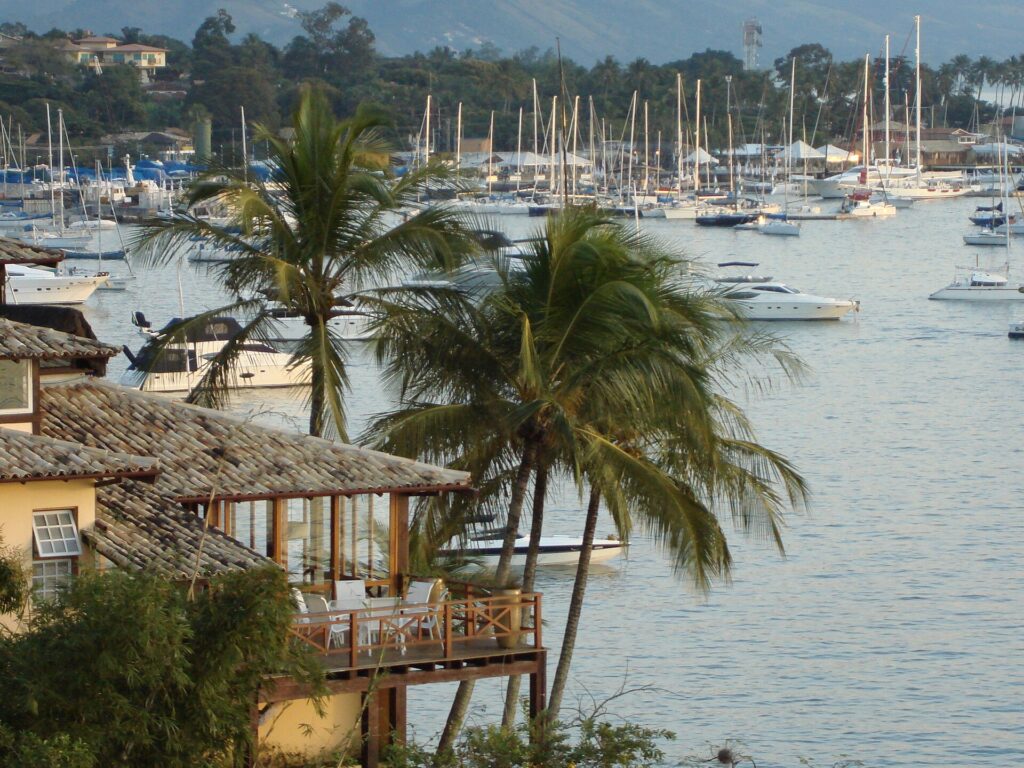
Fifteen minutes by ferry from the mainland lies an island-mountain covered in untouched Atlantic Forest, where 43 beaches are split between the civilised side — guesthouses, good food, a charming pier — and the wild side, of caiçara villages with no electricity and beaches you can only reach by trail, boat or 4×4. Ilhabela is two worlds on the same island, and the ecotourist will want both.
Getting there
The ferry leaves from São Sebastião (about 230 km from SP) and crosses the channel in 15-20 minutes — pedestrians travel free; cars pay a fee and face serious lines on public holidays (book a slot online). On the island, the paved road runs only along the western face; the rest is adventure.
The two sides of the island
- Western face (channel): urbanised beaches such as Curral (lively), Feiticeira and Julião (families), with the sun setting over the mainland.
- Eastern face (ocean): the wild ones — Castelhanos (22 km of dirt road, 4×4) and Bonete (a 4-hour trail or a boat), voted among the most beautiful beaches in Brazil. We have devoted an article to each: Bonete and Castelhanos.
Fresh water and a sea of regattas
The mountain that holds the forest also pours out waterfalls: Toca (with natural water slides and facilities), Água Branca (pools in the forest, free access) and dozens of hidden veils. At sea, Ilhabela is the Brazilian capital of sailing — the International Week in July is the largest in Latin America, and local schools offer sailing tasters and yacht trips all year round.
Practical tips
- Repellent is the law: the island’s blackflies show no mercy to unsuspecting ankles.
- Set aside 3-4 days: one for the urban side, one for Castelhanos, one for Bonete/the waterfalls.
- High season and public holidays fill the ferry — arrive early or book a slot.
- Best time: April to November (less rain, firm trails, a sea made for diving).
🥾 Who is it for?
Effort: easy on the western side (beaches by car); moderate to intense on the adventures of the eastern side. Children: Julião and Feiticeira are perfect for the little ones; Castelhanos by 4×4 is fun from ages 6-7. Older travelers and reduced mobility: the western face has an urbanised seafront, beaches with flat access and very accessible boat/yacht trips; the wild side demands a trail or a rough road — choose the boat whenever possible.