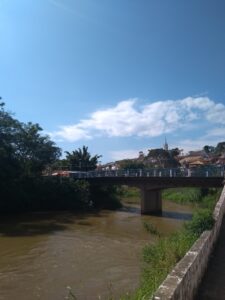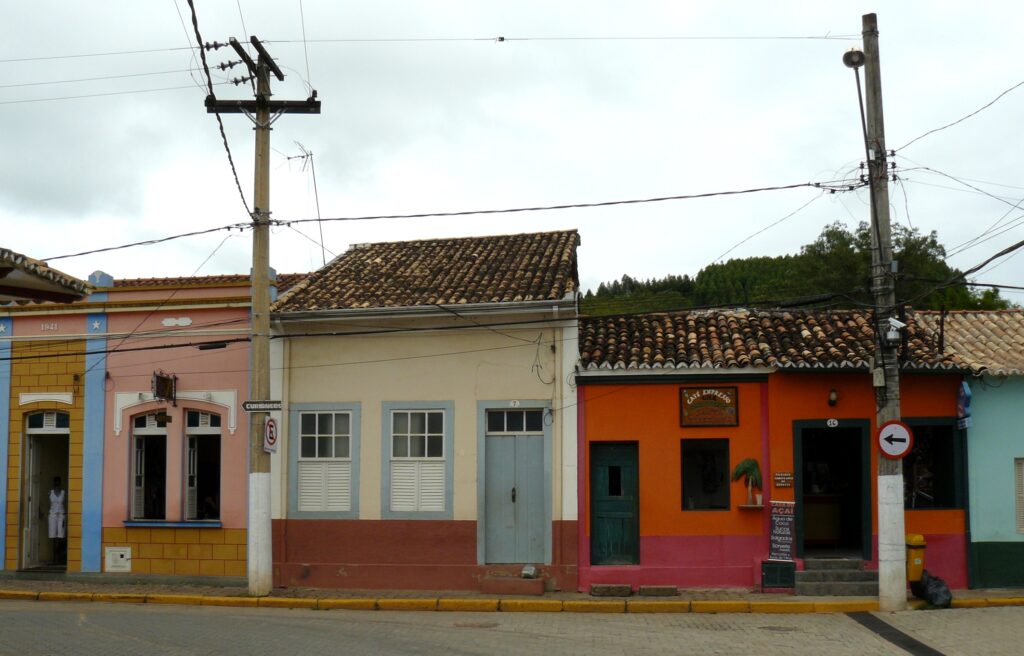
Few Brazilian towns have proved so resilient: in 2010 a historic flood brought down part of the listed center of São Luiz do Paraitinga — including the parish church of 1840. The town rebuilt everything, brick by brick, and remains what it always was: the caipira cultural heart of São Paulo state, with 450 preserved townhouses, the best-loved marchinha Carnival in the interior and the Serra do Mar at the bottom of the garden.
Getting there
About 180 km from São Paulo, on the Taubaté-Ubatuba road (SP-125) — which makes it the perfect cultural stopover between the Vale do Paraíba and the northern coast. The historic center is walkable; the countryside calls for a car.
Culture on every corner
- Historic center — colorful townhouses from the coffee era, the reborn parish church and the municipal market with pestle-ground paçoca and cambuci.
- Marchinha Carnival — 100,000 revellers singing local compositions; the anti-trio-elétrico in person.
- Festa do Divino — 10 days of faith and folklore, 50 days after Easter.
- Festa do Saci (31 October) — the caipira answer to Halloween, with tall-tale telling and the one-legged imp as host.
Nature: the Serra do Mar with its doors open
The municipality holds the Núcleo Santa Virgínia of Parque Estadual Serra do Mar — trails through cloud forest, and rafting on the Rio Paraibuna, run since 1996 on the rapids inside the park (full article: rafting in Paraitinga). On the road to Lagoinha, Cachoeira Grande (38 m, around R$ 22) makes for a whole afternoon of pools.
When to go
February for Carnival (book months ahead!), April to September for dry trails and a quiet town, October for the Saci. The mountain climate guarantees cool nights all year — a dinner of afogado (the local stew) with a viola playing in the background is the standard way to close the day.
🥾 Who is it for?
Effort: easy in the historic center and at the organized waterfalls; moderate to intense on the trails and rafting. Children: a playful town (Saci! marchinhas! paçoca!) for all ages; rafting from ages 12-14 depending on the section. Seniors and reduced mobility: the flat center with its historic pavements (uneven — take care) and the festivals are the strong point; lookouts and short-access waterfalls round it off without demands. Culture is the most accessible ecotourism there is.