
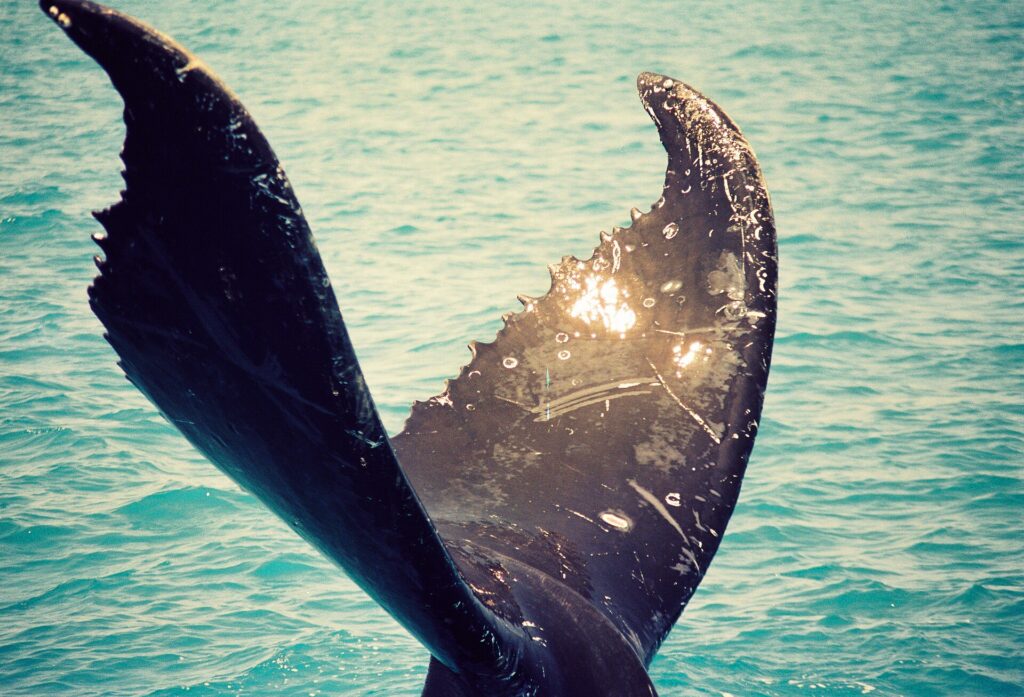
Every winter, humpback whales make the longest migration in the South Atlantic: they leave Antarctica and swim 4,000 km to the warm, shallow waters of Abrolhos to mate and give birth. From June to November, the sea off southern Bahia becomes a nursery for 40-ton giants — complete with breaches, tail slaps and calves playing at the surface. Here is the full guide to the spectacle (general logistics live in the Abrolhos guide).
The humpback calendar
| Months | What happens |
|---|---|
| June – July | The first groups arrive; males show off breaching |
| August – September | Absolute peak: thousands in the region, births, maximum surface activity |
| October | Mothers with growing calves practicing breaches — the cutest scenes |
| November | The last groups depart for Antarctica |
How to watch
- Dedicated departures from Caravelas (R$ 350-600, half day to full day): licensed boats with biologists from the Humpback Whale Project (Projeto Baleia Jubarte) on board — the deep-knowledge option.
- On the way to the park: day trips to Abrolhos (Jun–Nov) cross the nursery — many groups get whales “as a bonus” before the snorkeling.
- From a live-aboard: sleeping in the archipelago during the season means waking up to whale blows all around. The definitive experience.
Giant etiquette
Whale watching is regulated: minimum distance of 100 m, engine in neutral on approach, a time limit per group, never separating mother and calf, never chasing. Serious boats follow the rules to the letter — be wary of anyone promising to “get up close”. And here is the veterans’ secret: when the boat cuts the engine and the hull becomes a sound box, you can HEAR the males singing through the water. No photo competes with that moment.
The story you are helping fund
Hunted to the edge of disappearance, Brazil’s humpbacks numbered ~1,000 in the 1980s; today they exceed 25,000 — and Abrolhos is the heart of that recovery, with the Humpback Whale Project (Caravelas) monitoring every season. Your whale-watching ticket pays for research, entangled-whale rescues and environmental education. Tourism that saves whales: ecotourism at its best.
🥾 Who is it for?
Effort: light — humpback watching happens from the deck of the boat. Children: from age 6 (with seasickness medicine in your pocket); seeing a humpback breach marks a childhood. Seniors and reduced mobility: feasible — it is a seated activity; choose larger, more stable catamarans in season (Jul–Oct).