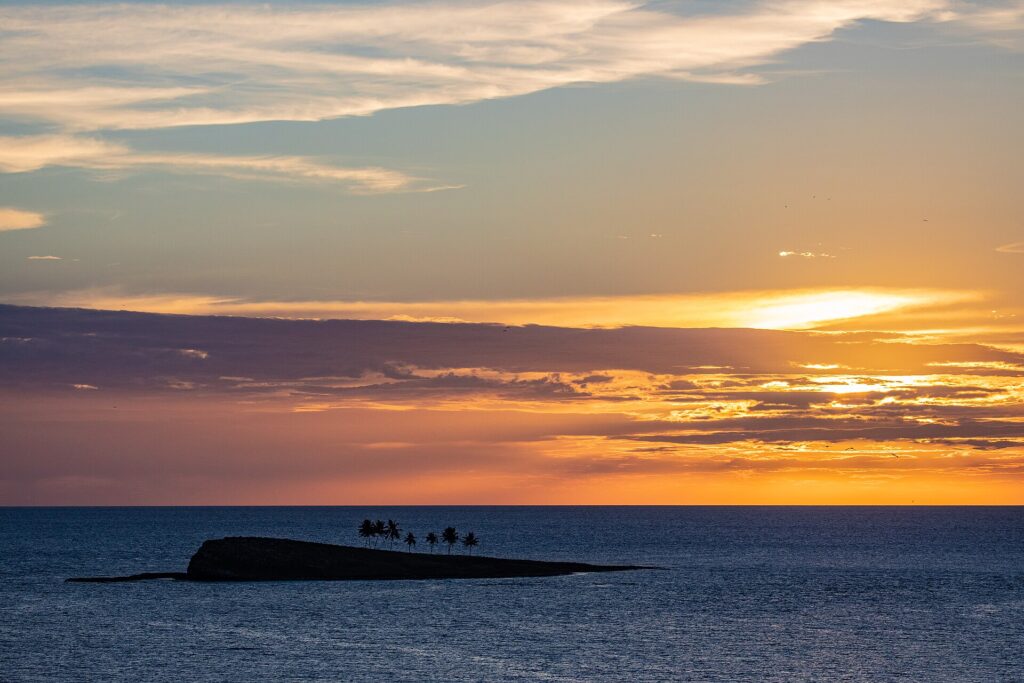
Some 70 km off Bahia’s southern coast, five volcanic islands ringed by the richest reefs in the South Atlantic make up the Marine National Park of Abrolhos — Brazil’s first (1983), and the nursery where half of the South Atlantic’s humpback whales come to give birth. Darwin passed through in 1832 and was amazed; so will you be. Here is the complete expedition guide.
Base and access
Everything departs from Caravelas (BA), a small historic town from Brazil’s discovery era, 36 km from Teixeira de Freitas (most practical airport: Porto Seguro, 220 km away). It takes 2h30 to 5h by boat, depending on the vessel and the sea, to reach the archipelago — true open ocean: if you get seasick, you know the drill (medication 1h before, eyes on the horizon).
Visit formats
| Format | 2026 reference | Who it’s for |
|---|---|---|
| Day trip (full day, fast boat) | R$ 700 – R$ 950 | Snorkeling on the reefs + a visit to Siriba Island among the boobies; Jun–Nov includes whales along the way |
| Live-aboard (2-3 days sleeping on board) | R$ 1,800 – R$ 3,500 | Divers and devotees: sunset over the archipelago, 4-6 dives, starry skies on deck |
| Whale watching (Jun–Nov) | R$ 350 – R$ 600 (dedicated departures) | The humpback spectacle without going all the way to the park — details in whales in Abrolhos |
What you will see
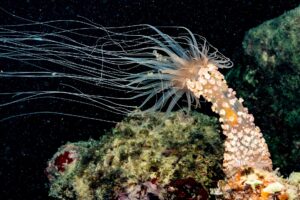
- Underwater: the “chapeirões” — mushroom-shaped coral pillars found nowhere else on Earth — surrounded by parrotfish, turtles and all the color detailed in our Abrolhos diving guide.
- On the islands: colonies of boobies and frigatebirds that never learned to fear people — the Siriba trail, walked with an ICMBio ranger, passes within meters of the nests.
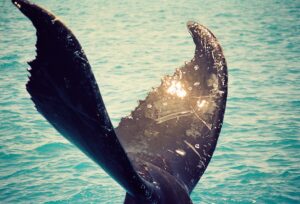
- In season: 40-ton humpbacks breaching — the reason behind half the trips and every shout on deck.
Why Abrolhos matters
Abrolhos proved that protection works: from the few dozen humpbacks spotted in the 1980s, the population has rebounded to tens of thousands — one of the greatest victories in marine conservation anywhere, and whale-watching tourism was a key part of it (a living whale is worth more than a dead one, in the economy too). Visiting helps fund what comes next. Bring a camera and binoculars, and come back to tell the story — ideally right here in the ecoturista comments.
🥾 Who is it for?
Effort: moderate — not because of the activity, but because of the hours of open ocean on the way out (seasickness is the villain). Children: from age 8, with a stomach already tested on boats. Seniors and reduced mobility: feasible for anyone who travels well by boat; the crew assists with island landings — talk to the operator about sea conditions.