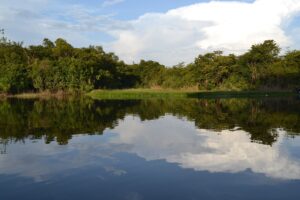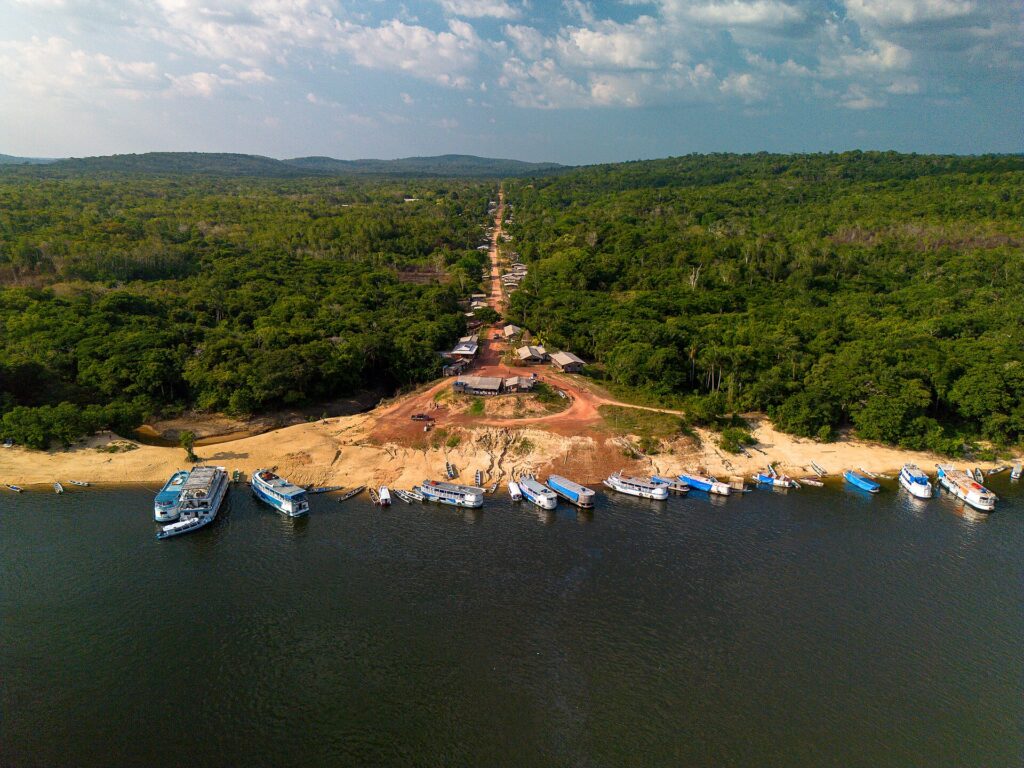
In western Pará, where the Rio Trombetas comes down in rapids from the border with the Guianas, lives one of the finest stories in Brazilian ecotourism: the community of Cachoeira Porteira, in the municipality of Oriximiná, at the heart of the largest titled quilombola territory in Brazil — 225,000 hectares of forest protected by around 150 families descended from those who sought freedom upriver two centuries ago.
Getting there
The adventure begins in Oriximiná, reached by boat or regional flight from Santarém/Manaus. From there it is around 4 hours by voadeira (fast launch) or 13 hours on a regional boat up the Trombetas to the community. The isolation is part of the experience — and the reason the forest is intact.
What you live there
- Rapids and waterfalls — the cascading Trombetas forms landscapes of rock and foam framed by the forest.
- River beaches — in the dry season, banks of pale sand emerge in the dark river.
- Living quilombola culture — cassava-flour making, stories, traditional festivals and the community’s annual culture festival.
- Sport fishing — trophy peacock bass in little-fished water; we explain how it works in the article on sport fishing on the Rio Trombetas.
- Amazonian wildlife — the surroundings include the Reserva Biológica do Trombetas, a historic refuge for Amazon river turtles.
Tourism that secures a territory
Here tourism is community-based: simple guesthouses run by the community itself, local guides and boatmen, food from the smallholding and the river. Every visit strengthens the economy that keeps the families on their land — the best barrier against the mining and land-grabbing pressures circling the region. Book well in advance through community contacts or sport-fishing operators who work in partnership with the quilombolas.
When to go
In the Amazonian dry season (August to December), the river drops, the beaches appear and the fishing improves. In the flood, the rapids fill with force and the flooded forest has a magic of its own. Take documents, personal medicines and cash — there are no banks and no reliable signal upriver.
🥾 Who is it for?
Effort: easy in the activities themselves (boat, contemplation, time with people), but the long voadeira journey calls for a willingness to accept the basics. Children: from ages 8-10, used to rough travel. Older travelers and reduced mobility: the hours on a launch seat and the simple facilities call for an honest assessment; for those who travel well, quilombola hospitality repays it twice over. A destination for deep immersion — the less hurry, the better.