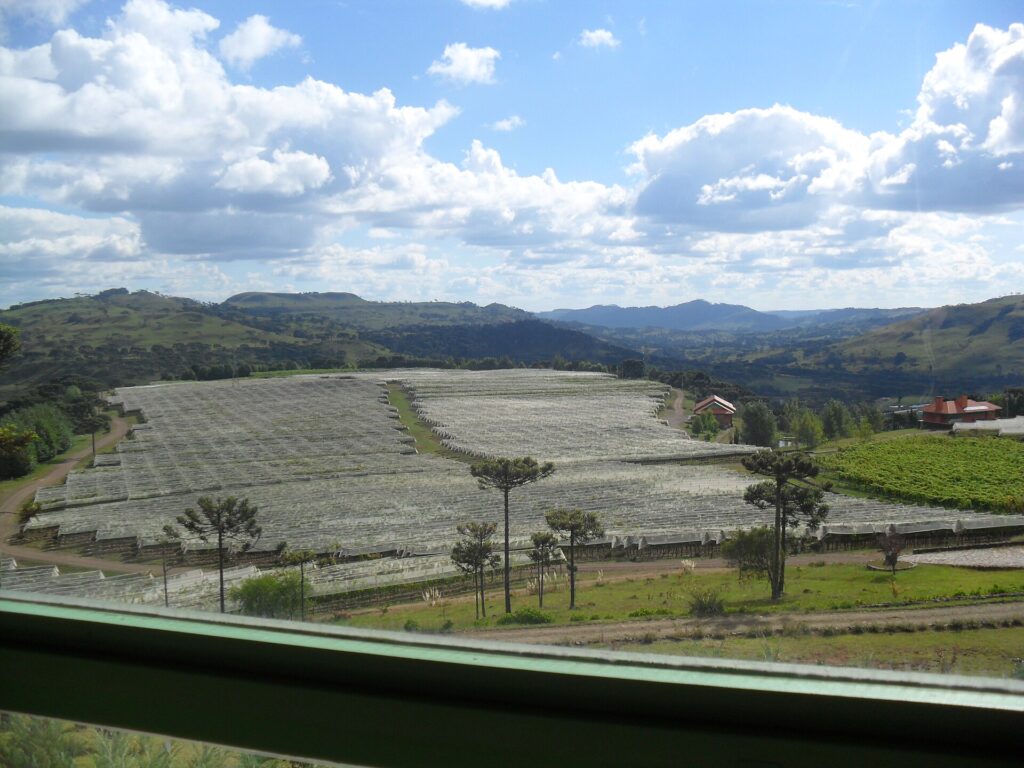
The cold that frightens travelers is exactly what the winemakers came looking for: in São Joaquim, the temperature swing of altitude (sunny days, freezing nights) ripens the grapes slowly and produces the high-altitude wines that put Santa Catarina on the world map — vibrant sparkling wines and elegant reds born at 1,300 meters.
The houses on the route
- Villa Francioni — the cathedral of Santa Catarina wine: glass architecture over the vineyards, guided tours in several formats — children up to 11 go free; prices and times on the Villa Francioni official site — and views that compete with the glasses. Book ahead.
- D’Alture — the most awarded in the state, with tastings, paired lunches, picnics between the vines and cabins to sleep at the winery itself (advance booking).
- Leone di Venezia — family and terroir in intimate tastings (from R$ 128, Tuesday to Sunday, by booking on the official site; prices confirmed in August 2026).
- Neighboring bonus — Quinta da Neve (the pioneer, by appointment) and houses in Urupema and rural São Joaquim complete the glass for itineraries of two to three days.
How to arrange the day
Two wineries a day is the civilised pace (tours plus a paired lunch consume delicious hours). Have a designated driver or a booked transfer — the rural mountain roads do not forgive recklessness, and the glasses deserve to be honored. Between visits, apple orchards and araucária viewpoints fill the gaps.
When to go
February to May: the vintage — the harvest up here is late and varies by year and by winery; in 2026 the official Vindima de Altitude season ran from 1 March to 3 May, with loaded vines and a harvest atmosphere. June to August: dormant vines under frost (extremely photogenic) and reds beside the fireplace. In both seasons, bring a coat: the highland night does not negotiate.
🥾 Who is it for?
Effort: light — tastings, vineyard walks and generous tables. Children: the wineries welcome families (high-altitude grape juices exist and are excellent), but the program is essentially for adults. Older travelers and people with reduced mobility: a tailor-made itinerary — the big houses have ramps, lifts and adaptable tours; mention it when you book. Wine tourism is, by vocation, the most comfortable ecotourism there is.