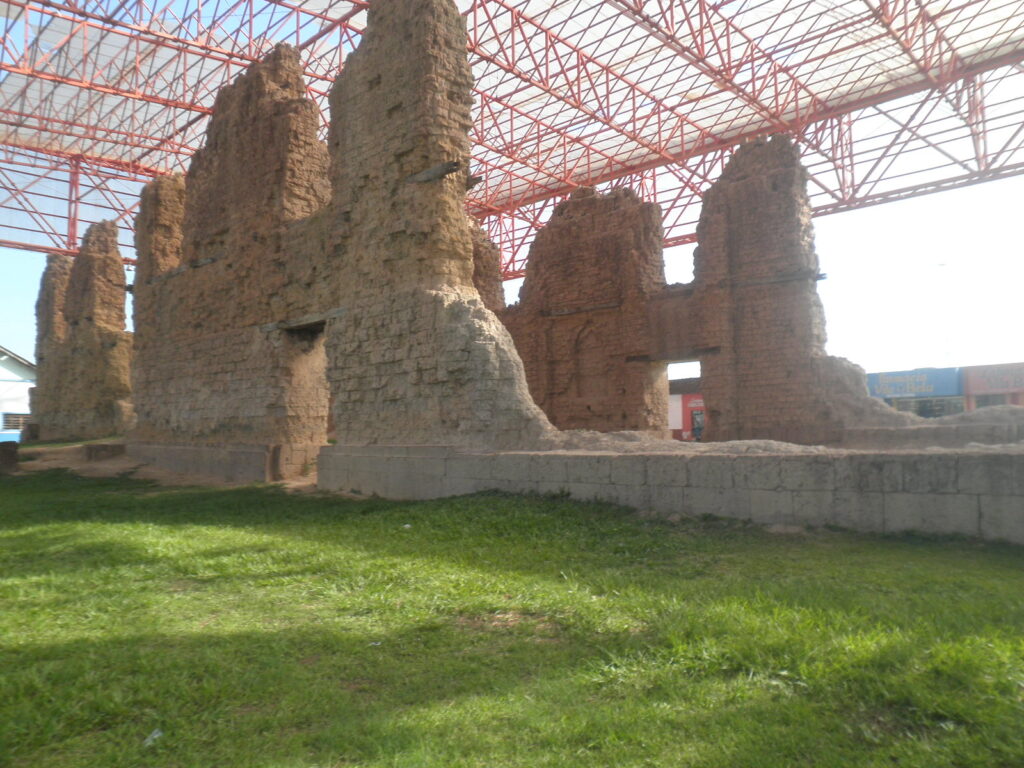
The ecotourism we champion here has four pillars — and one of them is valuing local communities and cultures. Few places in Brazil deliver that pillar like Vila Bela da Santíssima Trindade: a town where colonial history and quilombola resistance are not in a museum, they are in the street. This is the cultural companion to the Vila Bela guide — because leaving the Cachoeira do Jatobá and ignoring the town would be missing half the trip.
The ruins that frame the sky
The Igreja Matriz da Santíssima Trindade (1771) was never finished — and that is exactly what makes it unforgettable: walls of canga stone open to the sky, windows framing clouds, swallows where the altar would be. Late in the afternoon, the golden light crosses the ruins and produces the most beautiful photographs in western Mato Grosso. Beside it, the Palácio dos Capitães-Generais (1752) houses the town museum, with pieces from the period when this remote village ran half of colonial Brazil.
The Congo: heritage that dances
When the capital moved to Cuiabá (1820), the masters left — and the enslaved and freed black population stayed, inheriting the town. From that history came the Festança de Vila Bela, held in July: weeks of celebration with the Congo (a dramatic dance of African kingships, declared cultural heritage), the chorado, food cooked in copper pans and the church of São Benedito at the center of it all. If you can choose your travel dates, choose July: the waterfalls are still good AND there is the festival — the complete package of nature and culture.
How to visit with respect (and where to spend well)
- Hire guides and guesthouses from the community itself — in Vila Bela that is not a slogan, it is the engine of the local economy.
- The Festança is a religious and family celebration before it is an attraction: photograph with permission, take part with humility.
- Try the copper-pan cooking and the furrundu (papaya and rapadura sweet) — quilombola comfort food as memory.
- At the ruins, no climbing on the walls: 250 years of canga stone deserve another 250.
That is what ecotourism is: the Cachoeira do Jatobá brings you here, and the history of Vila Bela brings you back. Put the whole trip together in the destination guide.
🥾 Who is it for?
Effort: easy — a historical and cultural itinerary through the ruins and the center of the first capital of Mato Grosso. Children: the quilombola history and the ruins enchant from ages 7-8. Seniors and reduced mobility: very accessible — short, flat walks between the historic sites; the Congada festival is for everyone.
Photo: Alex Viegas, via Wikimedia Commons — CC BY-SA 4.0. Image resized; derivative under the same licence.