
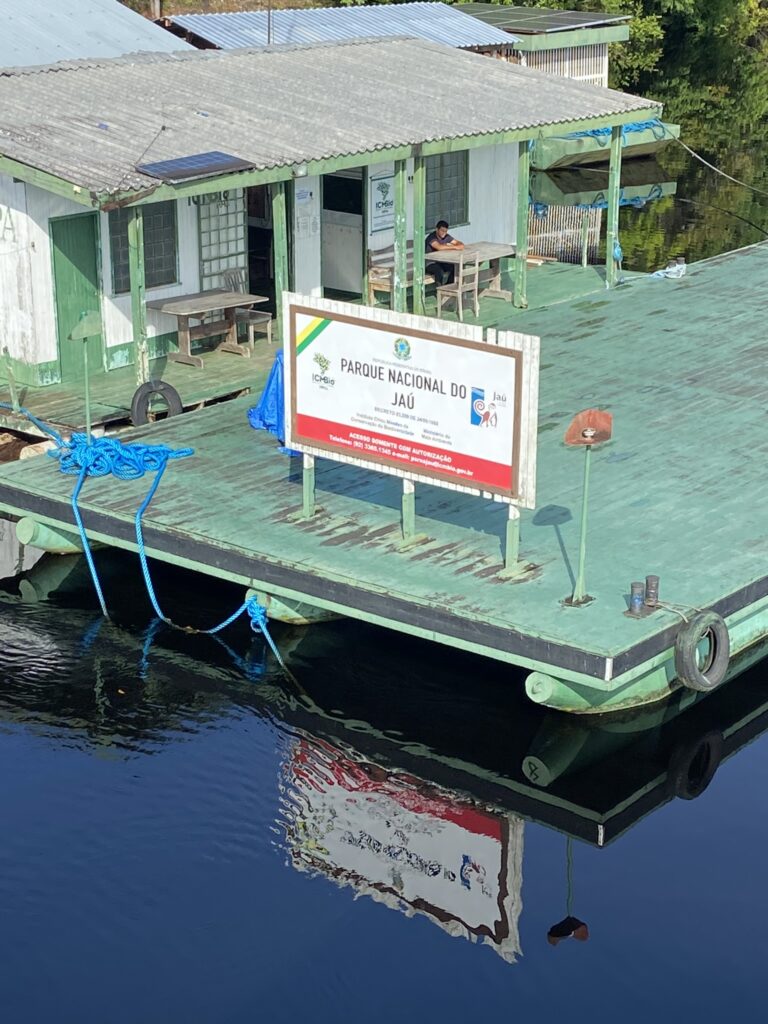
Imagine a park larger than many countries, where an ENTIRE river basin — the 450 km of the Rio Jaú — runs protected from source to mouth. Parque Nacional do Jaú, created in 1980 and recognized as a UNESCO World Heritage Site, is one of the largest blocks of protected tropical forest on the planet: 2.3 million hectares of deep Amazon between Novo Airão and Barcelos, in the heart of the Rio Negro.
Why it is unique
The Jaú is the only conservation unit in Brazil that fully protects the basin of a large, high-volume river — a living laboratory of black waters, igapós and terra firme forests. The wildlife list is breathtaking: jaguar, giant otter, manatee, black caiman, river dolphins, red howler monkeys and giants such as the pirarucu. Together with Anavilhanas and other neighboring reserves, it forms the Central Amazon Ecological Corridor.
How to visit
The gateway is Novo Airão, the same base as Parque Nacional de Anavilhanas — and the visit requires prior authorization from ICMBio, arranged by accredited agencies and boats. There is no entrance fee. Access is exclusively by river: boat expeditions (from regional sailing boats to hotel boats) head up the Rio Negro and enter the Jaú, on itineraries ranging from 3 to 7 days with nights on board.
What you do on the expedition
- Canoe trips through the igapós and black-water igarapés (easy effort — you paddle little and contemplate a lot).
- Night spotting of caimans and dolphin watching.
- Interpretive trails on terra firme with local guides (easy to moderate effort).
- A visit to the rapids and waterfalls of the lower Rio Jaú.
- Meetings with the riverside communities and the quilombola community of Tambor, who have lived in the territory for generations.
When to go and how much it costs
In the dry season (September to February), white sand beaches emerge and the trails open up; in the flood (March to August), canoes go deep into the forest through the igapós. Expeditions depart from Novo Airão or Manaus, from R$ 2,500-3,000 for 3-4 day itineraries with everything included — the more days, the deeper (literally) you go.
🥾 Who is it for?
Effort: easy to moderate — the expedition is by boat, with optional activities; any active person keeps up well. Children: from ages 6-8 they get a lot out of it (canoes, dolphins, beaches), always with a life jacket and supervision; babies are not advisable given the distance from medical facilities. Older travelers and reduced mobility: feasible! Life on board is calm and most outings are done sitting in the canoe — tell the agency so they can adapt boarding and choose boats with better accessibility. It is one of the great Amazonian destinations that is friendliest for those who walk little.