
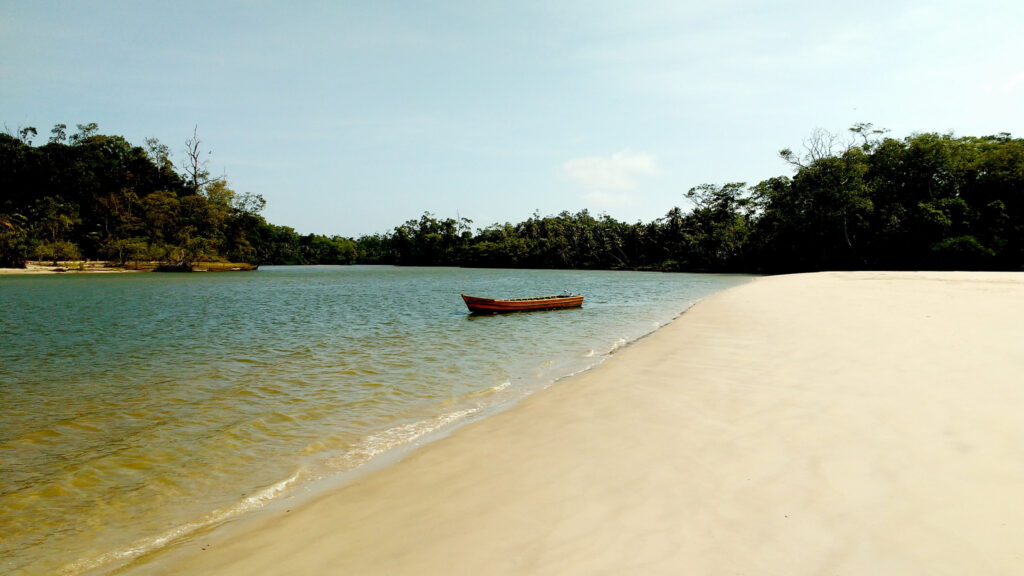
There is a place in Brazil where the police patrol mounted on buffaloes, the beaches change size with the tide of the river-sea, and a thousand-year-old civilisation left ceramics that astonish the world. The Ilha de Marajó, in Pará, is the largest fluvio-marine island on the planet — 40,000 km², bigger than many countries — and one of the most singular destinations in Brazilian ecotourism.
Getting there
From Belém, fast launches make the crossing to Soure/Salvaterra in around 2h30 (about R$ 60-70 each way, departures in the morning). Anyone traveling by car takes the ferry from the port of Icoaraci, a crossing of roughly 4 hours. The pair of Soure and Salvaterra, separated by the Rio Paracauari, concentrates the guesthouses, beaches and outings.
Beaches between river and sea
The Marajó beaches have a character of their own: fresh (or nearly fresh) water, pale sand and stalls of fresh fish. Praia do Pesqueiro, in Soure, is the most famous — wide, with low dunes and seafood restaurants. Barra Velha and Grande de Salvaterra deliver golden late afternoons, and Joanes keeps Jesuit ruins overlooking the meeting of the waters. Walking on them at low tide is an easy activity, perfect for all ages.
Buffaloes, farms and flooded plains
With around 600,000 buffaloes — more than people — Marajó is the national capital of the animal. The farms open their gates for buffalo rides, outings across the flooded plains full of birds and tastings of the famous Marajó cheese. We cover it all (including where to see the buffalo-mounted police!) in the article on buffaloes and Marajoara culture.
Marajoara ceramics and living culture
Long before colonisation, the Marajoara culture produced sophisticated ceramics that today inspire studios in Soure and Salvaterra — visit the workshops, watch clay become art and take home an original piece (a purchase that sustains the tradition). Round it off with carimbó on the local nights and river cooking: filhote catfish, prawns and the most authentic açaí of your life.
When to go and for how long
From August to November the weather is drier and the island’s roads are good; in the rainy season (December to June), the flooded plains explode with life and birds — each season has its own spectacle. Three to four days cover Soure, Salvaterra and a farm comfortably.
🥾 Who is it for?
Effort: easy — beaches, farms and boat trips, almost all of it flat. Children: an excellent destination at any age; the buffalo ride is suitable from around the age of 6, always guided. Older travelers and reduced mobility: very feasible — journeys by car/boat, beaches with easy access and a calm pace; just check the facilities with your guesthouse (some streets in Soure are sand). It is one of those destinations the whole family, from grandchildren to grandparents, enjoys together.