Fernando de Noronha is not a pretty beach: it is a living conservation laboratory in the middle of the Atlantic, 545 km from Recife. The archipelago is a UNESCO World Heritage site, it has the clearest sea in Brazil, and a daily visitor cap that keeps the whole thing working. In this complete, up-to-date guide you, ecotourist, will find how to get there, what it costs (with no surprises), what to do, and the rules that make Noronha the best-preserved destination in the country.
Where it is, and why Noronha is different
The archipelago belongs to Pernambuco and has 21 islands, but only the main one is inhabited. More than 70% of the territory is a Marine National Park, run by ICMBio, and the rest is an Environmental Protection Area. In practice: a limited number of visitors, environmental fees that fund conservation, and clear rules for coexisting with the wildlife. It is the model that lets you swim within meters of turtles and nurse sharks without destroying what you came to see.
How to get there
Daily flights leave from Recife (1h20) and Natal (1h10), at R$ 1,500 to R$ 3,500 return, on top of the leg to those cities. Booking 2 to 3 months ahead and avoiding December to February keeps you at the bottom of that range. On arrival you pay — or show, if you paid online — the compulsory fees detailed below.
Noronha’s fees in 2026
| Fee | Amount | What it funds |
|---|---|---|
| TPA (Environmental Preservation Fee) | R$ 105.79 per day (tapering from the 5th day) | Island infrastructure and preservation |
| Marine National Park ticket | R$ 192 (Brazilians) / R$ 384 (foreign visitors), valid 10 days | Access to Sancho, Baía dos Porcos, Sueste and the park trails |
What to do: the essentials
- Baía do Sancho — repeatedly voted the most beautiful beach in the world; reached by a staircase set into a cleft in the cliff. Go early.
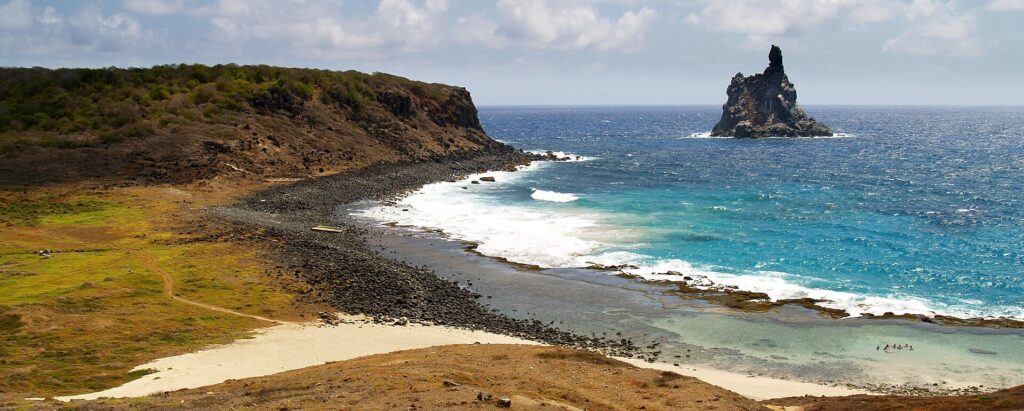
- Baía dos Porcos — the postcard shot with Morro Dois Irmãos; natural pools at low tide.
- Ilhatur (around R$ 350) — a full-day tour that introduces the island; good for the first day.
- Boat trip with dolphins (R$ 175 to R$ 320) — sunset with spinner dolphins escorting the bow.
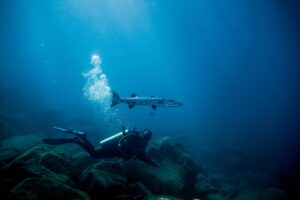
- Diving — from snorkeling at the Porto to a first tank dive; visibility up to 50 m. The detail is in our Noronha diving guide.
- Projeto Tamar and turtle nesting — free talks at night and, from December to June, monitored nesting at Leão beach.
- Atalaia trail — a shallow natural pool with compulsory booking and strict rules (no sunscreen in the water).
What it costs in total
No dressing it up: Noronha is the most expensive destination in Brazil. Simple guesthouses cost R$ 300 to R$ 450 a night for a couple, mid-range ones sit between R$ 600 and R$ 900, and luxury easily passes R$ 2,000. Meals run from R$ 40 (a set lunch) to R$ 140. A 4-to-5-day trip comes to R$ 5,500 to R$ 12,000 per person. The accounts are broken down line by line — with real saving strategies — in what Fernando de Noronha really costs.
When to go
There is no bad season, only the right season for each goal: diving from August to December, surf from December to March, swimming-pool seas on the sheltered side in the first half of the year. We explain it month by month — including the turtle nesting calendar — in the best time for Fernando de Noronha.
The ecotourist’s golden rules in Noronha
- Chemical sunscreen is banned at several spots (such as Atalaia) — use mineral or biodegradable versions, or a UV shirt.
- Do not touch, chase or feed the animals — the fines are heavy and enforcement works.
- Single-use plastic is restricted on the island; bring your own bottle.
- The park beaches have access hours — respect the signs and your guide’s instructions.
Torn between Noronha and the other favorites of the Brazilian northeast? See our comparison, Jericoacoara versus Noronha and the list of 10 ecotourism destinations in the Brazilian northeast.
🥾 Who is it for?
Effort: light to moderate — short trails, beaches and boat trips; the Atalaia trail asks for some agility on the rocks. Children: great from ages 5-6; the natural aquarium at Sueste and the Porto are the calmest spots. Older travelers and people with reduced mobility: workable — beaches such as the Porto have easy access, and the boat trip shows the island without effort; some trails and staircases (Sancho!) are challenging.