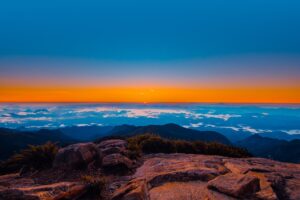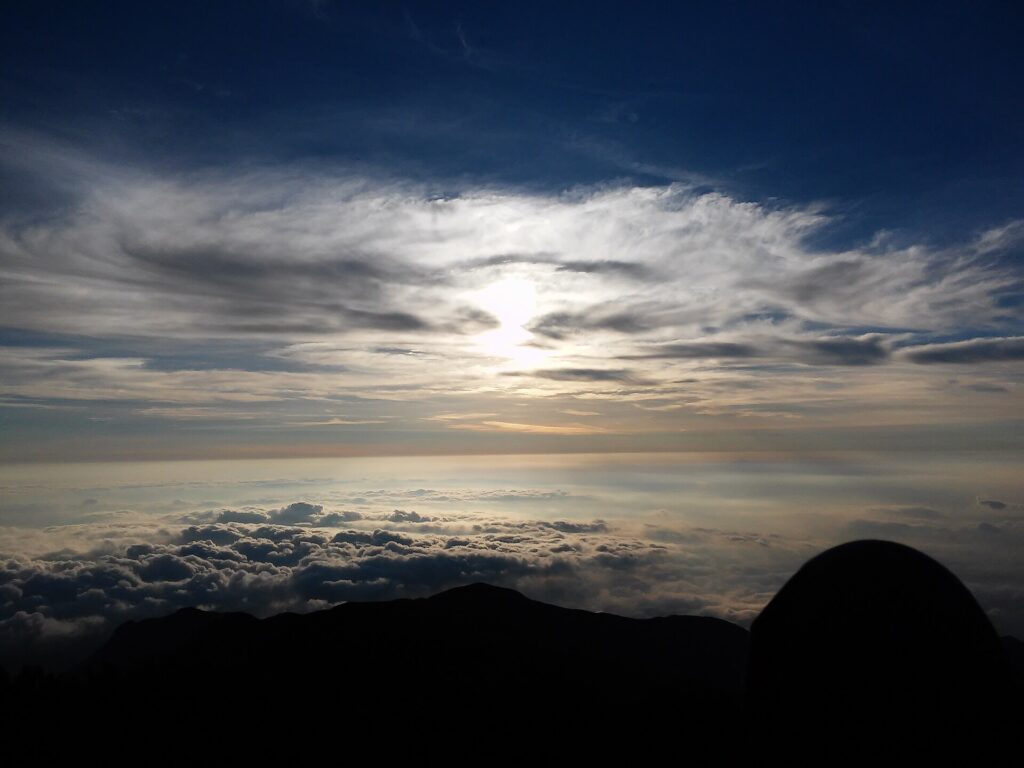
On the Minas–Espírito Santo border, a green wall rises to almost 2,900 meters: this is Parque Nacional do Caparaó, home of Pico da Bandeira — the third-highest point in Brazil and, by some distance, the country’s great accessible summit: it demands no climbing, only legs and the will to see the most famous sunrise in the Brazilian mountains.
Two sides, two experiences
- The Minas side (Alto Caparaó): the classic — a well-equipped village, the entrance 10 km away and 4×4 cars/taxis that climb to Tronqueira (1,970 m), shortening the walk. A 6.3 km trail to the summit.
- The Espírito Santo side (Pedra Menina): the charming one — access via Casa Queimada, a shorter trail (4.5 km) and a sunrise view straight down the front of the range. Less infrastructure, more quiet.
Far more than the summit
The park holds Atlantic Forest valleys with waterfalls and pools (Vale Verde, Aurélio, Farofa on the capixaba side), the Vale Encantado with its icy natural pools, lookouts and secondary peaks such as Cristal and Pedra Roxa. In the villages, award-winning mountain coffee — the Caparaó region has become a terroir for speciality coffees well worth tasting.
Logistics and prices
Entry in the region of R$ 17-25, with online booking (ICMBio/partner) — compulsory for camping in the official areas (Tronqueira, Terreirão and Casa Queimada; around R$ 20-40 a night). The standard classic ascent: sleep at Terreirão (2,370 m) and attack the summit before dawn — the step by step is in the article on sunrise at Pico da Bandeira.
When to go (and the cold)
May to September: dry, clear skies and the coldest small hours in the Southeast — the minimum drops below -10 °C with daily frost in winter. That is part of the appeal and part of the danger: proper thermal gear is not optional. In summer, afternoon rain closes the summit in — always climb in the morning.
🥾 Who is it for?
Effort: moderate to intense at the summit (900 m of gain on the Minas side); easy in the valleys and waterfalls of the lower reaches. Children: waterfalls and campsites from ages 5-6; the summit from 10-12 with preparation and serious warm clothing. Seniors and reduced mobility: the 4x4s up to Tronqueira and the lower lookouts show off the range without long walks; the summit demands preparation — and is conquered every year by well-trained ecotourists aged 70+. Caparaó rewards every level of leg.