
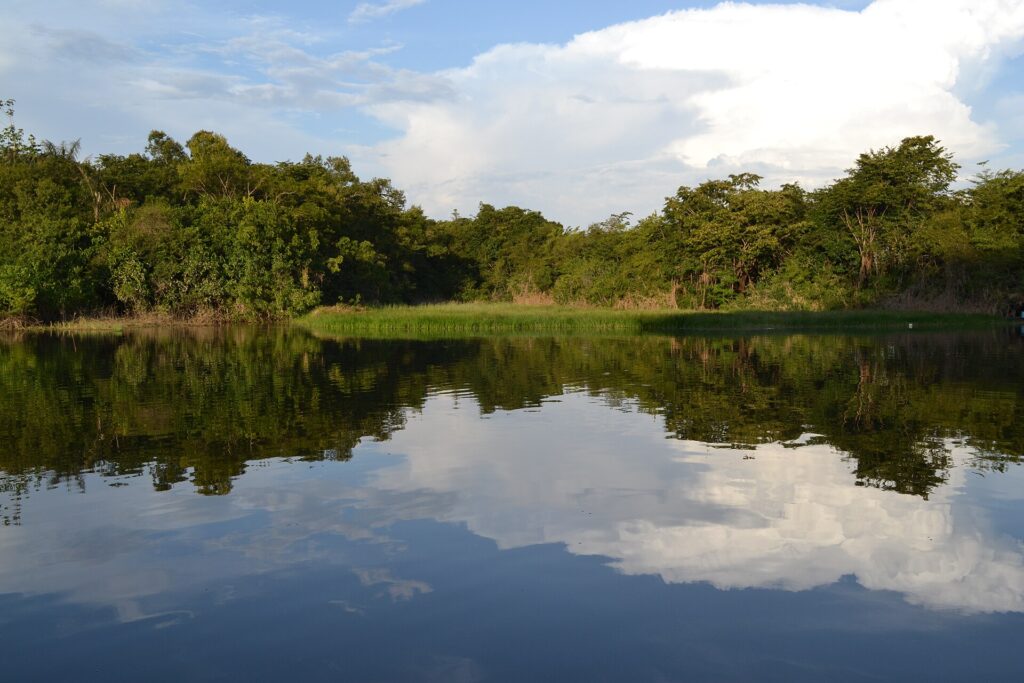
There is a kind of fishing that conserves more fish than it takes: catch-and-release sport fishing — and few places practice it in a setting as untouched as the Rio Trombetas, in the waters of the quilombola territory of Cachoeira Porteira, in Oriximiná-PA.
What you fish for
The star is the tucunaré-açu, the gold-striped predator that explodes on a surface lure like few fish in the world — in little-fished water, trophy specimens pass 8 kg. Completing the list are redtail catfish, surubins, jaús and the scrappy piranhas. All on the catch-and-release system: a quick photo, a barbless hook, the fish back in the river.
How the operation works
The fishing seasons run in the dry season (August to December), when the river drops and the fish concentrate. Packages leave Oriximiná with voadeiras, local pilots and accommodation in the community or in simple seasonal structures — the quilombola boatmen know every pool and every rock in the river, and the tourism income stays in the territory. Book months in advance: the places per season are few, deliberately.
What to take
- Your own tackle (medium-heavy action rods, surface and mid-water lures) — replacing anything there is impossible.
- Full sun protection: UV shirt, gloves, bandana and hat.
- A rain jacket and dry bags — Amazonian weather changes without warning.
- A valid federal amateur fishing licence.
- Absolute respect for the community’s rules and the limits of the territory.
Why this fishing conserves
Every angler who pays to release fish funds the economic alternative the community chose instead of predatory fishing and mining. A river full of giant peacock bass is the asset — and keeping it that way has become the best business in Cachoeira Porteira. Fishing with a purpose, the way the ecotourist likes it.
🥾 Who is it for?
Effort: moderate — whole days fishing under the sun, repeated casting and long journeys by voadeira. Children: from ages 10-12 who already fish; the operation is adult by nature. Older travelers and reduced mobility: experienced anglers of 60+ are common clients — the effort adapts to each person’s pace; the real requirement is the mobility to get in and out of the boat on river banks. Non-anglers: the setting and the culture are worth the trip on their own.